Can Dogs Eat Peanut Butter? Check the Label for Xylitol First
Plain peanut butter is safe for most dogs, but xylitol can be deadly. See how to read the label, how much to give and what to do in an emergency.
 PawFacto Editorial Team
4 min read
Short answer: Yes, plain peanut butter is safe for most dogs in small amounts. The one thing that can make it dangerous is xylitol, a sweetener that is highly toxic to dogs. Read the ingredients label every single time.
Peanut butter is the unofficial currency of dog ownership. It stuffs toys, hides pills and buys a few minutes of quiet. It’s also the food where a quick glance at the label can be the difference between a happy dog and an emergency vet visit.
Is peanut butter safe for dogs?
Yes, if it’s the right kind. Peanuts themselves aren’t toxic to dogs, and a spoonful of plain peanut butter gives them some protein and healthy fats. The trouble is that it’s also rich in fat and calories, and some brands add ingredients that dogs shouldn’t have.
The ingredient that matters: xylitol
Xylitol is a sugar alcohol used to sweeten sugar-free and “low sugar” products. It’s safe for people. In dogs, it’s very different. According to the US Food and Drug Administration, dogs absorb xylitol quickly and it triggers a strong release of insulin, which can send blood sugar crashing. The FDA says this drop can happen within 10 to 60 minutes, and untreated it can quickly become life-threatening.
The FDA warns that xylitol turns up in some peanut and nut butters, as well as in sugarless gum, mints, baked goods, toothpaste, some medicines and supplements, and sugar-free desserts.
How to check your jar:
- Turn it around and read the ingredients, not the front label.
- Look for “xylitol.” It may also be listed as “birch sugar.”
- Be extra careful with products marketed as sugar-free, low sugar, “lite” or diabetic-friendly.
- Ingredients can change, so check again each time you buy, even for a brand you trust.
What to look for in a dog-safe peanut butter
- A short ingredient list, ideally just peanuts (and maybe a little salt)
- No xylitol or other artificial sweeteners
- Unsalted, or very low in salt
- No added sugar
How much peanut butter can a dog have?
Keep it small. A common veterinary guideline is that treats shouldn’t make up more than about 10% of daily calories, and peanut butter is calorie-dense. For a small dog, a lick or half a teaspoon is plenty. For a large dog, a teaspoon or two now and then is reasonable. Too much can lead to weight gain and, because it’s fatty, an upset stomach or in some dogs pancreatitis.
Clever (and safe) ways to use it
- Stuff and freeze: Spread a thin layer inside a stuffable toy and freeze it for a longer-lasting chew.
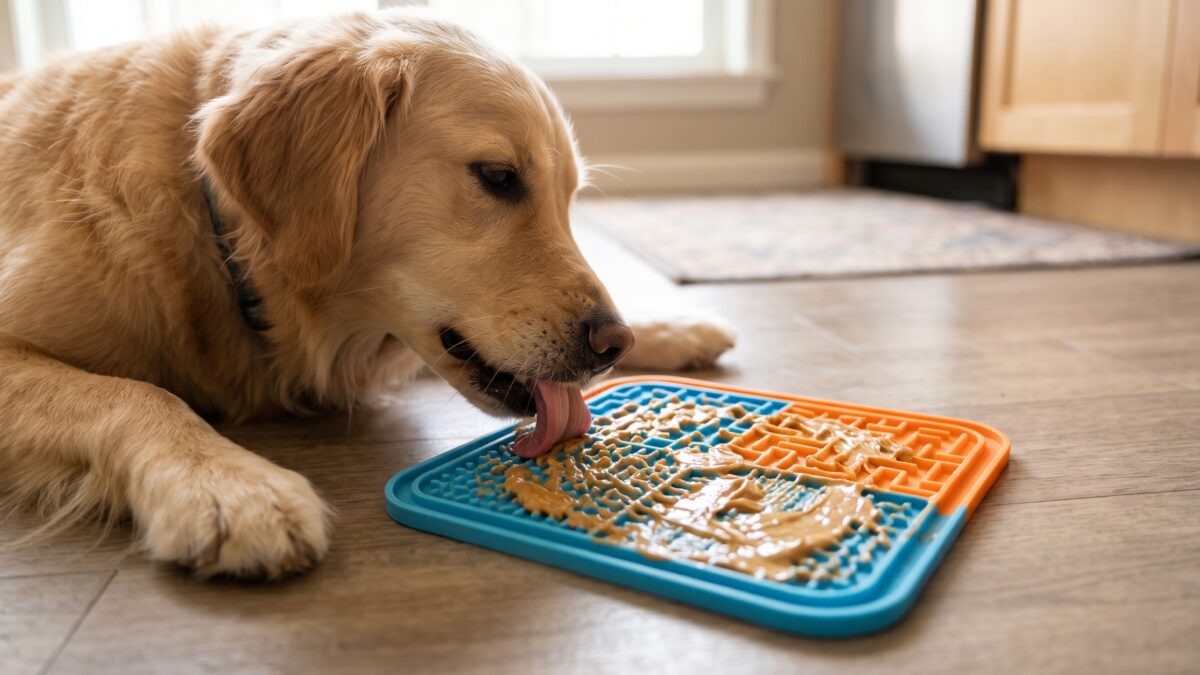
- Lick mat: Smear a little on a lick mat to keep a dog busy during a bath or nail trim.
- Medication: A small dab can hide a pill. Use a xylitol-free jar and confirm with your vet that the medication is fine with food.
What if my dog ate peanut butter with xylitol?
Treat it as an emergency, even if your dog seems fine. Signs can start with vomiting, then move to weakness, a wobbly walk, collapse or seizures, but the FDA notes that some signs may not appear for 12 to 24 hours. Don’t wait for symptoms.
- Take the jar or label with you so the vet can see the ingredients.
- Call your vet or the nearest emergency animal hospital straight away.
- In the US, you can also call the ASPCA Animal Poison Control Center at (888) 426-4435 (a consultation fee may apply).
- Don’t try to make your dog vomit unless a vet tells you to.
What about cats?
Cats don’t seem to be affected by xylitol the way dogs are, partly because they aren’t drawn to sweets, but peanut butter isn’t a good food for them anyway. Ferrets, on the other hand, are at risk like dogs.
Quick answers about dogs and peanut butter
Is natural peanut butter safe for dogs?
Usually, yes, as long as it contains no xylitol and not much salt. “Natural” on the label isn’t a guarantee, so read the ingredients.
Can puppies have peanut butter?
A tiny taste is fine for most puppies, but keep portions very small and stick to xylitol-free peanut butter.
Can dogs be allergic to peanut butter?
It’s uncommon, but any food can trigger an allergy. Itching, hives, swelling or vomiting after eating it are reasons to stop and call your vet.
Which sweeteners should I look out for besides xylitol?
Xylitol is the dangerous one. Always scan for it first, and when in doubt, choose a different jar.
Sources
- US Food and Drug Administration, Paws Off Xylitol; It’s Dangerous for Dogs
- ASPCA, People Foods to Avoid Feeding Your Pets